The U.S. pharmaceutical industry has announced a revised code of conduct for its dealings with health providers, reports today’s Wall Street Journal ($). While the voluntary code will ban giving pens, mugs and other small gifts to doctors, it won’t curb some of the more controversial and lucrative financial connections between doctors and drug companies.
The New York Timesreports:
But the code provides no definite limits on the millions of dollars spent on speaking and consulting arrangements that drug makers have forged with tens of thousands of doctors. Nor does it ban the routine provision of office breakfasts and lunches, or the occasional invitation to educational dinners at fancy restaurants.
The move by the Pharmaceutical Research and Manufacturers of America, the industry’s trade group, comes amid increased scrutiny of the dealings between doctors and the pharmaceutical industry.
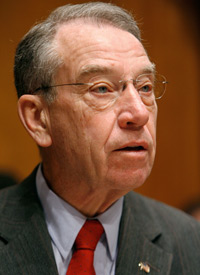 Sen. Chuck Grassley (R-IA) is sponsoring legislation that would require researchers to disclose fully any financial connections to drug companies. But one of the more striking examples he cited as illustrating the need for such legislation is in dispute.
Two weeks ago, Grassley asserted in a letter in the Congressional Record that a prominent Stanford University psychiatrist, Alan Schatzberg, did not fully reveal his financial interest in a company that manufactures one of the drugs he is investigating. Grassley contended that Schatzberg, in a disclosure statement to Stanford, said he held shares worth "over $100,000" in Corcept Pharmaceuticals, which produces an anti-psychotic drug called mifepristone.
Public filings with the Securities and Exchange Commission show that Schatzberg held more than 2 million shares of the stock with a value, as of June 12, of over $6 million. Schatzberg is the principal investigator of a National Institute of Health-sponsored study of mifepristone.
Stanford shot back with a letter that questions the factual basis of Grassleyâs assertions. The university said that after Schatzberg filed his form, further questions were raised and the researcher disclosed in writing to Stanford officials the "actual value" of his Corcept stock. "Based on our extensive investigation to date, we believe that Dr. Alan Schatzberg, a member of the medical school faculty, has fully complied with the Universityâs rigorous conflict of interest policy," says a statement issued by the university. A spokesman for Grassley could not be reached late Thursday.
This isn't the first time Grassley has examined impropriety in financial dealings between researchers and the pharmaceutical industry. Last month he revealed that top child psychiatrists at Harvard University received millions in consultation fees from drug makers and didnât disclose such dealings. Previously he reported that a University of Cincinnati psychiatrist received more than $100,000 from Astra Zeneca while studying an anti-psychotic medication manufactured by the firm.
Currently, the National Institute of Health requires researchers to disclose to their universities any “significant financial interest” that may affect the objectivity of their research studies. But the responsibility of evaluating such conflicts rests primarily with those institutions — not the NIH.
The NIH defines significant financial interest as a $10,000 payment or a 5 percent stake in an entity.
The institutions, which do much of their policing internally, must file the financial disclosures with the NIH and certify that their policies are consistent with NIH guidelines. But it is unclear if the NIH follows up on the disclosures. A January 2008 Department of Health and Human Services report found that the NIH could not provide an accurate count of financial disclosures between 2004 and 2006. The report also found that the financial disclosures often do not explicitly identify the actual conflict.
Correction, July 10, 2008: This post initially erred in describing a disclosure statement filed with Stanford University by Dr. Alan Schatzberg. The researcher told the university that his holdings in a pharmaceutical company whose drug he was studying were valued at "over" $100,000. The post did not include a full account of the university's response to statements by Sen. Charles Grassley. Stanford said that after filing his disclosure form, Schatzberg told the university his stock was worth more than $6 million.


