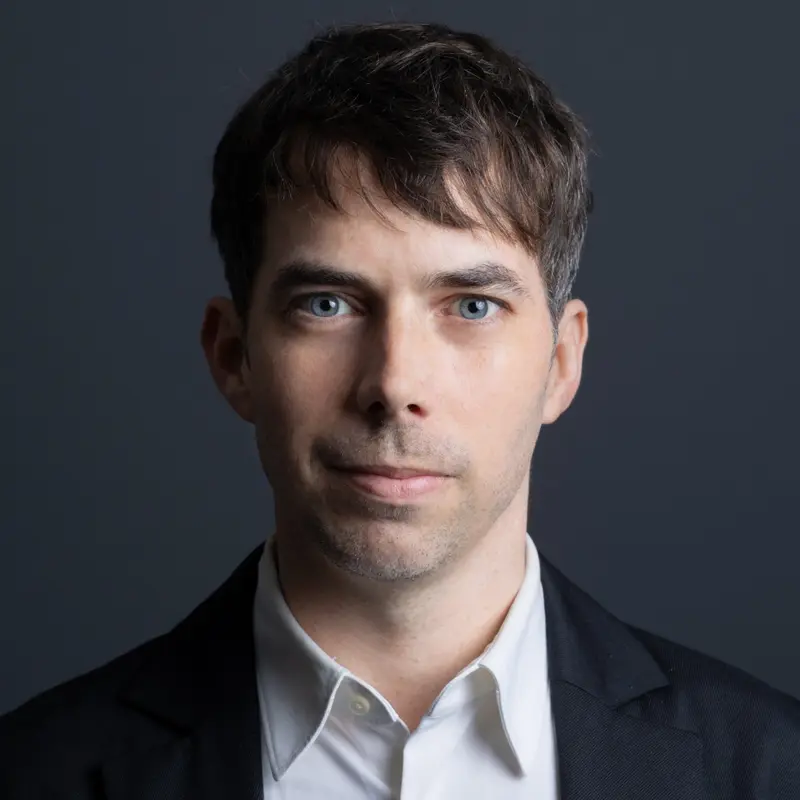
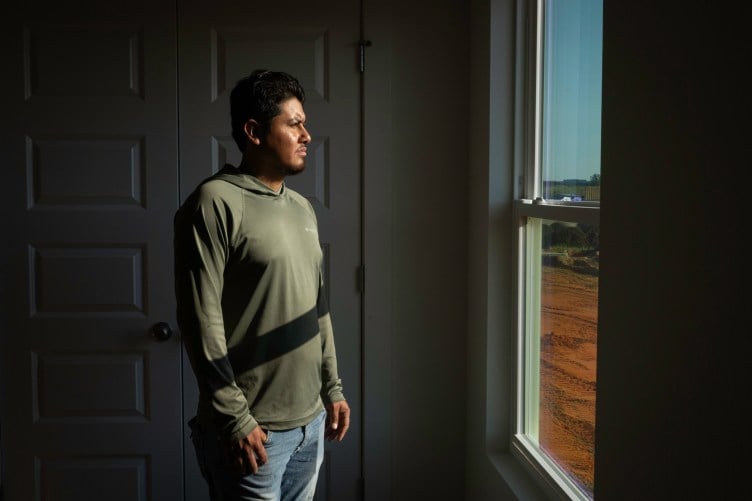
In this Frontline interview, Reinhard Siekaczek, a former Siemens executive, describes how bribery was “customary” at the company
This article is a joint report by ProPublica, PBSâs FRONTLINE, the The New York Times, and the Investigative Reporting Program at UC Berkeley. A related documentary will be broadcast on Frontline on April 7.
MUNICH – Reinhard Siekaczek was half asleep in bed when his doorbell rang here early one morning two years ago.
Still in his pajamas, he peeked out his bedroom window, hurried downstairs and flung open the front door. Standing before him in the cool, crisp dark were six German police officers and a prosecutor. They held a warrant for his arrest.
At that moment, Mr. Siekaczek, a stout, graying former accountant for Siemens A.G., the German engineering giant, knew that his secret life had ended.
âI know what this is about,â Mr. Siekaczek told the officers crowded around his door. âI have been expecting you.â
To understand how Siemens, one of the worldâs biggest companies, last week ended up paying $1.6 billion in the largest fine for bribery in modern corporate history, itâs worth delving into Mr. Siekaczekâs unusual journey.
A former midlevel executive at Siemens, he was one of several people who arranged a torrent of payments that eventually streamed to well-placed officials around the globe, from Vietnam to Venezuela and from Italy to Israel, according to interviews with Mr. Siekaczek and court records in Germany and the United States.
What is striking about Mr. Siekaczekâs and prosecutorsâ accounts of those dealings, which flowed through a web of secret bank accounts and shadowy consultants, is how entrenched corruption had become at a sprawling, sophisticated corporation that externally embraced the nostrums of a transparent global marketplace built on legitimate transactions.
Mr. Siekaczek (pronounced SEE-kah-chek) says that from 2002 to 2006 he oversaw an annual bribery budget of about $40 million to $50 million at Siemens. Company managers and sales staff used the slush fund to cozy up to corrupt government officials worldwide.
The payments, he says, were vital to maintaining the competitiveness of Siemens overseas, particularly in his subsidiary, which sold telecommunications equipment. âIt was about keeping the business unit alive and not jeopardizing thousands of jobs overnight,â he said in an interview.
Siemens is hardly the only corporate giant caught in prosecutorsâ cross hairs.
Three decades after Congress passed a law barring American companies from paying bribes to secure foreign business, law enforcement authorities around the world are bearing down on major enterprises like Daimler and Johnson & Johnson, with scores of cases now under investigation. Both companies declined comment, citing continuing investigations.
Albert J. Stanley, a legendary figure in the oil patch and the former chief executive of the KBR subsidiary of Halliburton, recently pleaded guilty to charges of paying bribes and skimming millions for himself. More charges are coming in that case, officials say.
But the Siemens case is notable for its breadth, the sums of money involved, and the raw organizational zeal with which the company deployed bribes to secure contracts. It is also a model of something that was once extremely rare: cross-border cooperation among law enforcement officials.
German prosecutors initially opened the Siemens case in 2005. American authorities became involved in 2006 because the companyâs shares are traded on the New York Stock Exchange.
In its settlement last week with the Justice Department and the Securities and Exchange Commission, Siemens pleaded guilty to violating accounting provisions of the Foreign Corrupt Practices Act, which outlaws bribery abroad.
Although court documents are salted throughout with the word âbribes,â the Justice Department allowed Siemens to plead to accounting violations because it cooperated with the investigation and because pleading to bribery violations would have barred Siemens from bidding on government contracts in the United States. Siemens doesnât dispute the governmentâs account of its actions.
Matthew W. Friedrich, the acting chief of the Justice Departmentâs criminal division, called corruption at Siemens âsystematic and widespread.â Linda C. Thomsen, the S.E.C.âs enforcement director, said it was âegregious and brazen.â Joseph Persichini Jr., the director of the F.B.I.âs Washington field office, which led the investigation, called it âmassive, willful and carefully orchestrated.â
MR. SIEKACZEKâS telecommunications unit was awash in easy money. It paid $5 million in bribes to win a mobile phone contract in Bangladesh, to the son of the prime minister at the time and other senior officials, according to court documents. Mr. Siekaczekâs group also made $12.7 million in payments to senior officials in Nigeria for government contracts.
In Argentina, a different Siemens subsidiary paid at least $40 million in bribes to win a $1 billion contract to produce national identity cards. In Israel, the company provided $20 million to senior government officials to build power plants. In Venezuela, it was $16 million for urban rail lines. In China, $14 million for medical equipment. And in Iraq, $1.7 million to Saddam Hussein and his cronies.
The bribes left behind angry competitors who were shut out of contracts and local residents in poor countries who, because of rigged deals, paid too much for necessities like roads, power plants and hospitals, prosecutors said.
Because government contracting is an opaque process and losers donât typically file formal protests, itâs difficult to know the identity of competitors who lost out to Siemens. Companies in the United States have long complained, however, that they face an uneven playing field competing overseas.
Ben W. Heineman Jr., a former general counsel at General Electric and a member of the American chapter of Transparency International, a nonprofit group that tracks corruption, says the enforcement of some antibribery conventions still remains scattershot. âUntil you have energetic enforcement by the developed-world nations, you wonât get strong antibribery programs or high-integrity corporate culture,â he said.
Afghanistan, Haiti, Iraq, Myanmar and Somalia are the five countries where corporate bribery is most common, according to Transparency International. The S.E.C. complaint said Siemens paid its heftiest bribes in China, Russia, Argentina, Israel and Venezuela.
âCrimes of official corruption threaten the integrity of the global marketplace and undermine the rule of law in the host countries,â said Lori Weinstein, the Justice Department prosecutor who oversaw the Siemens case.
All told, Siemens will pay more than $2.6 billion to clear its name: $1.6 billion in fines and fees in Germany and the United States and more than $1 billion for internal investigations and reforms.
Siemensâs general counsel, Peter Y. Solmssen, in an interview outside a marble-lined courtroom in Washington, said the company acknowledged that bribes were at the heart of the case. âThis is the end of a difficult chapter in the companyâs history,â he said. âWeâre glad to get it behind us.â
Mr. Siekaczek, who cooperated with German authorities after his arrest in 2006, has already been sentenced in Germany to two yearsâ probation and a $150,000 fine. During a lengthy interview in Munich, a few blocks from the Siemens world headquarters, he provided an insiderâs account of corruption at the company. The interview was his first with English-language news outlets.
âI would never have thought Iâd go to jail for my company,â Mr. Siekaczek said. âSure, we joked about it, but we thought if our actions ever came to light, weâd all go together and there would be enough people to play a game of cards.â
Mr. Siekaczek isnât a stereotype of a white-collar villain. There are no Ferraris in his driveway, or villas in Monaco. He dresses in jeans, loafers and leather jackets. With white hair and gold-rimmed glasses, he passes for a kindly grandfather â albeit one who can discuss the advantages of offshore bank accounts as easily as last nightâs soccer match.
Siemens began bribing long before Mr. Siekaczek applied his accounting skills to the task of organizing the payments.
World War II left the company shattered, its factories bombed and its trademark patents confiscated, according to American prosecutors. The company turned to markets in less developed countries to compete, and bribery became a reliable and ubiquitous sales technique.
âBribery was Siemensâs business model,â said Uwe Dolata, the spokesman for the association of federal criminal investigators in Germany. âSiemens had institutionalized corruption.â
Before 1999, bribes were deductible as business expenses under the German tax code, and paying off a foreign official was not a criminal offense. In such an environment, Siemens officials subscribed to a straightforward rule in pursuing business abroad, according to one former executive. They played by local rules.
Inside Siemens, bribes were referred to as âNAâ â a German abbreviation for the phrase ânützliche Aufwendungenâ which means âuseful money.â Siemens bribed wherever executives felt the money was needed, paying off officials not only in countries known for government corruption, like Nigeria, but also in countries with reputations for transparency, like Norway, according to court records.
In February 1999, Germany joined the international convention banning foreign bribery, a pact signed by most of the worldâs industrial nations. By 2000, authorities in Austria and Switzerland were suspicious of millions of dollars of Siemens payments flowing to offshore bank accounts, according to court records.
Rather than comply with the law, Siemens managers created a âpaper program,â a toothless internal system that did little to punish wrongdoers, according to court documents.
Mr. Siekaczekâs business unit was one of the most egregious offenders. Court documents show that the telecommunications unit paid more than $800 million of the $1.4 billion in illegal payments that Siemens made from 2001 to 2007. Managers in the telecommunications group decided to deal with the possibility of a crackdown by making its bribery procedures more difficult to detect.
So, on one winter evening in late 2002, five executives from the telecommunications group met for dinner at a traditional Bavarian restaurant in a Munich suburb. Surrounded by dark wood panels and posters celebrating German engineering, the group discussed how to better disguise its payments, while making sure that employees didnât pocket the money, Mr. Siekaczek said.
To handle the business side of bribery, the executives turned to Mr. Siekaczek, a man renowned within the company for his personal honesty, his deep company loyalty â and his experiences in the shadowy world of illegal bribery.
âIt had nothing to do with being law-abiding, because we all knew what we did was unlawful.â Mr. Siekaczek said. âWhat mattered here was that the person put in charge was stable and wouldnât go astray.â
Although Mr. Siekaczek was reluctant to take the job offered that night, he justified it as economic necessity. If Siemens didnât pay bribes, it would lose contracts and its employees might lose their jobs.
âWe thought we had to do it,â Mr. Siekaczek said. âOtherwise, weâd ruin the company.â
Indeed, he considers his personal probity a point of honor. He describes himself as âthe man in the middle,â âthe bankerâ or, with tongue in cheek, âthe master of disaster.â But, he said, he never set up a bribe. Nor did he directly hand over money to a corrupt official.
German prosecutors say they have no evidence that he personally enriched himself, though German documents show that Mr. Siekaczek oversaw the transfer of some $65 million through hard-to-trace offshore bank accounts.
âI was not the man responsible for bribery,â he said. âI organized the cash.â
Mr. Siekaczek set things in motion by moving money out of accounts in Austria to Liechtenstein and Switzerland, where bank secrecy laws provided greater cover and anonymity. He said he also reached out to a trustee in Switzerland who set up front companies to conceal money trails from Siemens to offshore bank accounts in Dubai and the British Virgin Islands.
Each year, Mr. Siekaczek said, managers in his unit set aside a budget of about $40 million to $50 million for the payment of bribes. For Greece alone, Siemens budgeted $10 million to $15 million a year. Bribes were as high as 40 percent of the contract cost in especially corrupt countries. Typically, amounts ranged from 5 percent to 6 percent of a contractâs value.
The most common method of bribery involved hiring an outside consultant to help âwinâ a contract. This was typically a local resident with ties to ruling leaders. Siemens paid a fee to the consultant, who in turn delivered the cash to the ultimate recipient.
Siemens has acknowledged having more than 2,700 business consultant agreements, so-called B.C.A.âs, worldwide. Those consultants were at the heart of the bribery scheme, sending millions to government officials.
Mr. Siekaczek was painfully aware that he was acting illegally. To protect evidence that he didnât act alone, he and a colleague began copying documents stored in a basement at Siemensâs headquarters in Munich that detailed the payments. He eventually stashed about three dozen folders in a secret hiding spot.
In 2004, Siemens executives told him that he had to sign a document stating he had followed the companyâs compliance rules. Reluctantly, he signed, but he quit soon after. He continued to work for Siemens as a consultant before finally resigning in 2006. As legal pressure mounted, he heard rumors that Siemens was setting him up for a fall.
âOn the inside, I was deeply disappointed. But I told myself that people were going to be surprised when their plan failed,â Mr. Siekaczek recalled. âIt wasnât going to be possible to make me the only one guilty because dozens of people in the business unit were involved. Nobody was going to believe that one person did this on his own.â
The Siemens scheme began to collapse when investigators in several countries began examining suspicious transactions. Prosecutors in Italy, Liechtenstein and Switzerland sent requests for help to counterparts in Germany, providing lists of suspect Siemens employees. German officials then decided to act in one simultaneous raid.
The police knocked on Mr. Siekaczekâs door on the morning of Nov. 15, 2006. Some 200 other officers were also sweeping across Germany, into Siemensâs headquarters in Munich and the homes of several executives.
In addition to Mr. Siekaczekâs detailed payment records, investigators secured five terabytes of data from Siemensâs offices â a mother lode of information equivalent to five million books. Mr. Siekaczek turned out to be one of the biggest prizes. After calling his lawyer, he immediately announced that he would cooperate.
Officials in the United States began investigating the case shortly after the raids became public. Knowing that it faced steep fines unless it cooperated, Siemens hired an American law firm, Debevoise & Plimpton, to conduct an internal investigation and to work with federal investigators.
As German and American investigators worked together to develop leads, Debevoise and its partners dedicated more than 300 lawyers, forensic analysts and staff members to untangle thousands of payments across the globe, according to the court records. American investigators and the Debevoise lawyers conducted more than 1,700 interviews in 34 countries. They collected more than 100 million documents, creating special facilities in China and Germany to house records from that single investigation. Debevoise and an outside auditor racked up 1.5 million billable hours, according to court documents. Siemens has said that the internal inquiry and related restructurings have cost it more than $1 billion.
Siemens officials âmade it crystal clear that they wanted us to get to the bottom of this and follow it wherever the evidence led,â said Bruce E. Yannett, a Debevoise partner.
At the same time, Siemens worked hard to purge the company of some senior managers and to reform company policies. Several senior managers have been arrested. Klaus Kleinfeld, the companyâs C.E.O., resigned in April 2007. He has denied wrongdoing and is now head of Alcoa, the aluminum giant. Alcoa said that the company fully supports Mr. Kleinfeld and declined to comment further.
Last year, Siemens said in S.E.C. filings that it had discovered evidence that former officials had misappropriated funds and abused their authority. In August, Siemens said it seeks to recover monetary damages from 11 former board members for activities related to the bribery scheme. Negotiations on that matter are continuing.
Earlier this year, Siemensâs current chief executive, Peter Löscher, vowed to make Siemens âstate of the artâ in anticorruption measures.
âOperational excellence and ethical behavior are not a contradiction of terms,â the company said in a statement. âWe must get the best business â and the clean business.â
Siemens still faces legal uncertainties. The Justice Department and German officials said that investigations were continuing and that current and former company officials might face prosecution.
Legal experts say Siemens is the latest in a string of high-profile cases that are changing attitudes about corruption. Still, they said, much work remains.
âI am not saying the fight against bribing foreign public officials is a fight full of roses and victories,â said Nicola Bonucci, the director of legal affairs for the Organization for Economic Cooperation and Development, which is based in Paris and monitors the global economy. âBut I am convinced that it is something more and more people are taking seriously.â
For his part, Mr. Siekaczek is uncertain about the impact of the Siemens case. After all, he said, bribery and corruption are still widespread.
âPeople will only say about Siemens that they were unlucky and that they broke the 11th Commandment,â he said. âThe 11th Commandment is: âDonât get caught.â â