


This post was updated on May. 11, 2009 9:30 a.m.
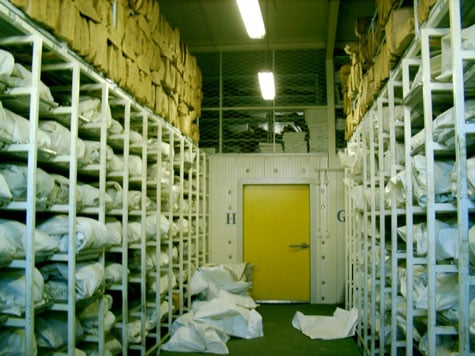
On Thursday, we reported that a stockpile of documents by and about Guantanamo detainees was in danger of being destroyed under a little-known court order obtained by the Bush administration in 2004.
Now, Michael Montgomery with the Center for Investigative Reporting and the Balkan Investigative Reporting Network (BIRN) bring us this surprising news: A trove of material related to the 1995 genocide in Srebrenica, Bosnia-Herzegovina was allegedly destroyed by the International Criminal Tribunal for Yugoslavia in the Hague.
Why? Because it was no longer needed, might pose a health hazard, andâget thisâit smelled bad.
More than 8000 Srebrenica residents are believed to have been killed and buried in mass graves in July 1995 by Bosnian Serb and Serbian forces. Many are still missing.
The suggestion that personal materials, such as identity cards of the dead found during grave exhumations, might have been incinerated by the prosecutorâs office before being offered to families has enraged surviving family members, according to the BIRN report. Because the entire population of Srebrenica fled during the attack without most of their belongings, those items might be the only ones family members have of missing loved ones. The items might also have been donated to museums, which have techniques to preserve fragile materials, to commemorate the events and educate future generations about them.
We had trouble believing this news, so we called up the Tribunal to get an explanation and were referred to the prosecutorâs office. Yesterdayâs BIRN report quoted Muniba Subasic, president of the Association of Mothers of Srebrenica and Zepa, who said that chief prosecutor Serge Brammertz confirmed the destruction of the materials at a meeting with the Association on Wednesday.
Tribunal spokesperson Olga Kavran denied that Brammertz had confirmed this. âHe simply said in accordance with procedures such material could be destroyed,â Kavran told us. âIf it was, photographs would be kept.â When we asked if the destruction had indeed occurred, Kavran said, âI canât confirm or discuss that actually.â
Update: May. 11, 2009 9:30 a.m. Today we spoke with Kada Hotic, vice-president of the
Association of Mothers of Srebrenica and Zepa, who said she was at the meeting
with Tribunal chief prosecutor Serge Brammertz in Bosnia last week. According to Hotic, Brammertz told the
group that the Tribunal had destroyed ID cards, passports and other personal
items found with bodies of the Srebrenica missing who were exhumed from mass
graves. âIâm completely
devastated,â she told ProPublica through a translator. âThese were personal things that belonged
to our loved ones….[The Tribunal] helped excavate a crime scene and then
destroyed the evidence. Itâs
really unacceptable.â
Hotic said Brammertz explained that Tribunal officials were
unable to store the items properly and were concerned that the material, which
had been in contact with decaying bodies, could spread infectious diseases. While many in the lay public fear dead
bodies, public health
experts have emphasized that they pose little threat to human health except
in rare situations, such as in certain outbreaks, which was not the case in
Bosnia.
Forensic anthropologist Jose Pablo Baraybar, who exhumed
mass graves in Bosnia and Kosovo under the Tribunalâs auspices, told ProPublica
that the level of fear Tribunal employees had of the materials his teams
collected struck him as irrational.
â[If there was] a bit of stench, people were totally alarmed, they were
totally crazy asking for biohazard measures,â he said. Baraybar was aware at the time of his
work that some materials had been disposed of by the Tribunal. âThis procedure is more or less regular,
meaning they [ICTY personnel] find things and if theyâre not of some use they
destroy them,â he told ProPublica.
âIt is a rotten piece of paper, but if you treat it as such, youâre
missing out on the huge other dimension this has for other people.â


