
Sure, there’s
the GOP symbol, but the real elephant in the room at any of the Republican
debates since December has been the super PAC, the turbocharged political
action committee able to raise and spend unlimited amounts of money on
political ads — as long as that spending isn’t coordinated with a
particular campaign.
Mitt Romney
supporters used Restore Our
Future to tank Newt Gingrich in Iowa, while
Gingrich supporters relied on Winning Our
Future for revenge in South Carolina.
Jon Huntsman’s
campaign would probably not have lasted as long as
it did without Our Destiny. Now that Rick Perry is out of the race, throwing
his support to Gingrich, the real question is what will happen to the war chest
of Make Us Great Again.
But those are
just the super PACs you’ve already heard about — the ones that candidates
grouse about at debates, with Romney calling one Winning Our Future ad that
portrayed him as a corporate raider “probably the biggest hoax since Bigfoot.”
As the
countdown continues to the South Carolina primary Saturday, it’s worth taking a
step back and considering all the confusing names, and all the confusing money
that might be spent in the coming months. It’s also worth considering how we
got to this new frontier, which even campaign operatives say is messy: Two
years ago on Saturday, the Supreme Court, in its ruling on Citizens United vs.
FEC, cracked open the door for super
PACs. Two months later, a federal appeal court’s decision in Speechnow.org
vs. FEC threw it wide open. Now,
registering as a super PAC is as simple as sending a letter and a form to the
FEC.
So far, at
least 283 super PACs have registered, although
60 are run by one Florida man, Josue Larose, and seem to serve no other purpose but piling up paperwork for
the FEC. And so far, super PACs have spent more than $29 million on the
presidential race. (You can follow the money with our PAC Track application.) Although
it’s not yet clear how that compares with overall spending by the candidates
themselves, reports indicated that super PAC spending in Iowa outstripped the
candidates’ by 2-to-1, said Paul Ryan, a lawyer with the Campaign Legal Center.
More spending,
likely the most ever in an election season, is on the horizon. And even though
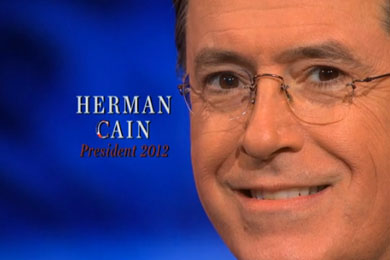
some super PACs seem to be parodies (like comedian Stephen Colbert’s Americans for a Better Tomorrow, Tomorrow, which has probably done more to deliver “super PAC” into the
American lexicon than any politician), the groups insist they are real.
“There’s all
kinds of games going on,” said Fred Wertheimer, president of Democracy 21, a nonprofit
pushing to rein in super PACs. “Some group has put up a website telling you how
to get around disclosure. Look, we have huge problems on our hands, and we get
to celebrate the cause of many of these problems on Jan. 21, the second
anniversary of the Citizens United decision. We have to deal with them as best
we can.”
Here’s a
rundown of some new super PACs and examples of how confusing things can get:
The Patriot Super
PAC, which registered with the FEC on Tuesday,
boasts a website promising to be the “future home of something quite cool.” It
will work to defeat President Barack Obama, but it shouldn’t be confused with the
conservative Patriot PAC, which promises to be the “point of the spear” and asks people
to sign a petition without providing
the text. Nor should either be mistaken for the Patriot Majority USA PAC, which supports Senate Democrats.
Protecting Our
Vote PAC registered on Jan. 13, with one of the
best signatures in any super PAC filing. Its mission is unclear: The website
simply says, Protecting Our
Vote PAC. American Sunrise
registered as a super PAC the same day, organized in part by Lora Haggard, the
former chief financial officer for onetime Democratic presidential candidate
John Edwards.
Citizens for
Prosperity and Good Government, not to be
confused with the nonprofit conservative advocacy group Americans for
Prosperity, registered on Jan. 10.
Some people
registering super PACs appear to be confused themselves. Patricia McBride of
Wasco, Calif., registered Citizens Fireup
Super PAC on Jan. 9 to support or oppose Obama but
neglected to say which angle she’ll take. McBride also wrote that she wished to
establish the super PAC as a (c4), which is shorthand for a 501(c)4, the IRS code for a social-welfare nonprofit.
Although 501(c)4s are allowed to make certain political expenditures, they are not
allowed to be super PACs. Regardless, the FEC appears to have registered the
group.
On Jan. 5, a
super PAC called “a SuperPAC” registered with the FEC, with a website at www.asuperpacforhire.com, which includes a way to donate. It also features the
explanation: “Have
you ever wanted a message to get out to the voting public about a candidate
running for federal office but didn’t want the mess of production, compliance,
or disclosure paperwork? a SuperPAC
wants to get the TRUTH out too.”
Treasurer Matthew Balazik
of Frederick, Md., said the group is real. Ads on its website, which proclaim “Paid
for by a SuperPAC,” target Democrats who’ve turned
Republican.
“We’re pretty
conservative around here,” Balazik wrote in response
to an email. “We believe fundamentally that you should be able to speak
publically (sic) and anonymously so long as you do not violate anyone else’s
rights.”
When asked if anyone
had tried to hire a SuperPAC super PAC, Balazik wrote simply: “That’s a good question.”
On Jan. 4, “The Internet” registered as a super PAC. Unfortunately, its website doesn’t
appear to be working, but it does raise the specter of ads proclaiming, “paid
for by The Internet.”
On Dec. 22,
the Real Leader PAC registered as a super PAC, with a website that still
leads to nowhere.
The previous week, Cain Connections
PAC
registered as a super PAC, with no website, days after Herman Cain had dropped
out of the Republican race. Its mission is unclear.
Earlier in December, the American
Crosswinds PAC— sounding remarkably similar to the Republican fundraising
juggernaut American
Crossroads
super PAC — registered as a super PAC, although it has no website and no
email address.
On Dec. 1, Feel the Heat PAC registered from a Washington P.O. box — just like many
real super PACs. Its website never got up and running, and reception must have been cool: On
Tuesday, it terminated itself. The Restore Trust
PAC, started by the same person, had similar
issues.
Also in December, Americans for a Better
Tomorrow, Today — clearly a play on Colbert’s super PAC, Americans for a
Better Tomorrow, Tomorrow — registered with the FEC. On Dec. 12, it
announced it wanted to be a super PAC, with a typo: “Americans for a Better
Tomorrow, Toady.”
Todd Bailey, who formed the super PAC, said
it’s working for the Occupy Wall Street movement, which has decried the Citizens
Unitedruling and the effect of money
on politics. In other words, a joke on a satire is operating in earnest,
apparently under the theory, “if you can’t beat ’em, join ’em.”
“There’s a
tool that’s been created that everyone’s using,” Bailey said. “You have to make
a choice. Either stand on sidelines, or get in the game and use a tool that
you’re really not comfortable with.”