Congressman Slams Military Brain-Testing Program
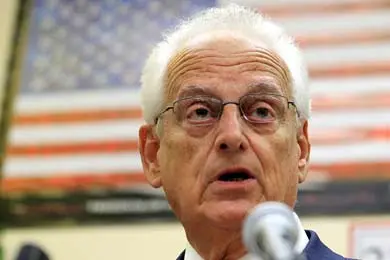
Rep. Bill Pascrell, D-N.J. (AP Photo/Julio Cortez)
Rep. Bill Pascrell, D-N.J., took to the House floor on Thursday to denounce flaws in the military’s cognitive testing program and garner support to fix it following a ProPublica and NPR story on the issue earlier this week.
Pascrell expressed disappointment that the military has not used computerized cognitive testing the way that Congress envisioned when it passed the 2008 Wounded Warriors bill.
The Defense Department has administered pre-deployment tests to more than 1 million troops, as mandated by the law. The idea was to compare those baselines to soldiers’ test scores when they come home to see if they have suffered a brain injury. But as ProPublica and NPR reported, only 11,000 troops have been tested post-deployment, and fewer than 3,000 took the test in the war zones.
The military has argued that routine ANAM testing post-deployment isn’t appropriate because it could lead to too many false positives and strain the military healthcare system.
During yesterday’s House session, Pascrell called this “a disgrace and disservice to our troops” and “a violation of the law.”
“With post-traumatic stress disorder and traumatic brain injury recognized as the signature injuries of the conflicts in Iraq and Afghanistan, you would think that the Defense Department had a good system to catch the injuries. They do not,” Pascrell said, slapping his fingers against the podium.
Pascrell has authored an amendment to the 2012 Defense Authorization Act that would force the military to conduct post-deployment cognitive testing on all returning service members.
Currently, the Defense Department uses a test called the Automated Neuropsychological Assessment Metrics, or ANAM, to assess troops. The amendment also calls for the completion of any studies designed to compare screening tools by the end of 2012. As ProPublica and NPR discovered, those studies have been significantly delayed, and aren’t currently slated for completion until 2015, more than two years after most of the troops are scheduled to return from Iraq and Afghanistan.
Brain Wars: How the Military Is Failing Its Wounded
The military has failed to diagnose brain injuries in thousands of soldiers returning from overseas.
The Story So Far
Traumatic brain injury is considered the “signature wound” of soldiers fighting in Iraq and Afghanistan. Official military statistics show that more than 115,000 soldiers have suffered mild traumatic brain injuries since the wars began. Shock waves from roadside bombs can ripple through soldiers’ brains, causing damage that sometimes leaves no visible scars but may cause lasting mental and physical harm.
Latest Stories in this Project
Get Updates
Our Hottest Stories
- Donations to Scott Walker Flagged as Potential Fraud
- In Race For Better Cell Service, Men Who Climb Towers Pay With Their Lives
- Billion Dollar Bait & Switch: States Divert Foreclosure Deal Funds
- Pardon Attorney Torpedoes Plea for Presidential Mercy
- Patient Died at New York VA Hospital After Alarm Was Ignored
- Introducing the ProPublica Patient Harm Community on Facebook
- Remember Stuxnet? Why the U.S. is Still Vulnerable
- Got Student Loans? Share Your Documents With Us
- Built for a Simpler Era, OSHA Struggles When Tower Climbers Die
- Congressional Leader Calls for Investigation of the Pardon Office
- Donations to Scott Walker Flagged as Potential Fraud
- Pardon Attorney Torpedoes Plea for Presidential Mercy
- Air Force Pilots Balk at Flying the World’s Most Expensive Fighter Jet
- In Race For Better Cell Service, Men Who Climb Towers Pay With Their Lives
- Patient Died at New York VA Hospital After Alarm Was Ignored
- Watchdog Group Calls for Probe of Lobbyists Behind Congressional Trip to Taiwan
- Billion Dollar Bait & Switch: States Divert Foreclosure Deal Funds
- N.Y. Congressman Will Reimburse Costs for $22,000 Taiwan trip
- Happy Graduation! Here's The Best, Most Depressing Journalism on Student Debt
- Remember Stuxnet? Why the U.S. is Still Vulnerable


4 comments
Fred Barnes
Dec. 2, 2011, 6:16 p.m.
Forget about baselining, it is pointless with ANAM. Just throw it out and try something diffierent.
Retired Vet
Dec. 6, 2011, 3:51 p.m.
As a former T B I provider cmts are my own. Not to reflect did, VA or AMED. There are a lot of obstacles. Individual stigma and denial. Priority of care, ABC’s C-does not mean cognitive. ANAM is a starting point. Military mission is fight or maintain peace. VA is care for injured. If not retainable than Medical release and treat by VA. DOD needs reevaluate chapters for underlying cauase either or both PTSD or T B I. Thus SC.
Retired Vet
Dec. 6, 2011, 3:56 p.m.
Correction did is DOD.
pj
Dec. 7, 2011, 3:34 p.m.
Retired Vet
Yesterday, 2:51 p.m.
As a former T B I provider cmts are my own. Not to reflect did, VA or AMED. There are a lot of obstacles. Individual stigma and denial. Priority of care, ABC’s C-does not mean cognitive. ANAM is a starting point. Military mission is fight or maintain peace. VA is care for injured. If not retainable than Medical release and treat by VA. DOD needs reevaluate chapters for underlying cauase either or both PTSD or T B I. Thus SC.
Commenting on this story is closed.