Jeff Gerth was a senior reporter at ProPublica. Previously, he worked as an investigative reporter at The New York Times from 1976 through 2005. His work has twice been honored with the Pulitzer Prize. He also won a George Polk Award. His often-prescient coverage has run the gamut from Al Qaeda to Enron, from Whitewater to Chinese technology transfers. During 2004 he was a visiting professor at Princeton University, where he taught an undergraduate seminar on investigative reporting. Gerth is also the co-author (with Don Van Natta Jr.), of Her Way: The Hopes and Ambitions of Hillary Rodham Clinton, published in 2007.
An investigation by ProPublica and The Washington Post finds that Secretary of State Clinton initially pressed to keep civilian programs and listening posts after the U.S. troop pullout in 2011, but then her State Department scrapped or slashed them at the behest of the White House and Congress.
Hundreds of cases are pending that involve claims that Tylenol has caused liver damage and deaths. The pain reliever’s maker won a jury verdict in the first.
Internal company documents that have emerged in a New Jersey trial make clear that marketing for Tylenol did not convey doctors’ concerns about its risks.
Filings from a lawsuit, scheduled to go to trial today in Atlantic City, describe a previously unreported lobbying campaign by McNeil Consumer Healthcare to protect its iconic painkiller.
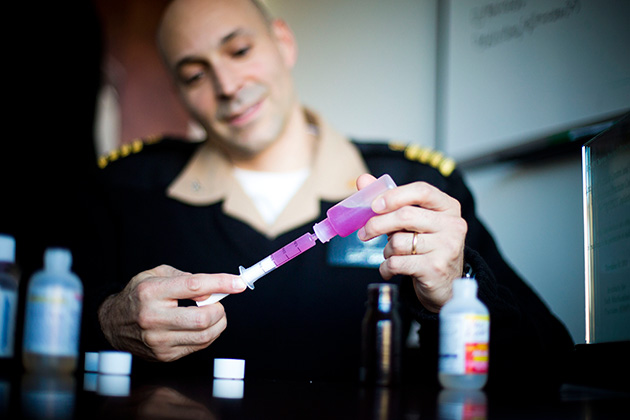
Flow restrictors can help prevent children from taking too much acetaminophen, the active ingredient in Tylenol, which can cause liver damage if taken in high doses.
After an investigation by the Toronto Star, Canada’s top health agency considers whether to lower the maximum recommended daily dose of the active ingredient in Tylenol and other painkillers.
Researchers raise alarms about unknown health risks of GE’s Omniscan and Bayer’s Magnevist, drugs injected to get better MRI pictures that contain the heavy metal gadolinium.
Millions of Americans use GlaxoSmithKline's purple inhaler. But whether Advair poses a higher risk of asthma-related death remains uncertain 15 years after regulators approved the drug.
Emails disclosed by a hacker show a close family friend was funneling intelligence about the crisis in Libya directly to the Secretary of State’s private account starting before the Benghazi attack.
Hillary Clinton's defense of her use of personal emails while she was secretary of state triggers memories of the "pink press conference" during the Whitewater investigation.
The former Treasury secretary and architect of the Obama administration's financial rescue sounds more like some of his detractors in papers that were never meant to be public.
In “Hard Choices,” the former secretary of state ignores or glosses over key aspects of her record on Iraq—including State Department responsibility for the country’s security assistance.
The former treasury secretary says his close ties to ex-Citi executive Robert Rubin ‘tempered my skepticism’ about the bank’s health in the years before the financial crisis hit.
Federal regulators’ announcement that they will examine the regulation of non-prescription drugs such as acetaminophen, the active ingredient in Tylenol, follows a ProPublica investigation.
Federal drug regulators are moving to enforce a ban on prescription drugs with more than 325 milligrams of acetaminophen. But you’ll still be able to buy pills that contain up to twice that dose over-the-counter at the gas station or grocery store.
Safety valves that cost pennies per bottle could save thousands of kids from being rushed to emergency rooms each year. A doctor has campaigned to have the devices added to all liquid medicines, but so far he’s had limited success.
Thank you for your interest in republishing this story. You are are free republish it so long as you do the following:
You can’t edit our material, except to reflect relative changes in time, location and editorial style. (For example, “yesterday” can be changed to “last week,” and “Portland, Ore.” to “Portland” or “here.”)
If you’re republishing online, you have to link to us and to include all of the links from our story, as well as our PixelPing tag.
You can’t sell our material separately.
It’s okay to put our stories on pages with ads, but not ads specifically sold against our stories.
You can’t republish our material wholesale, or automatically; you need to select stories to be republished individually.
You cannot republish our photographs without specific permission (ask our Public Relations Director Minhee Cho if you’d like to).
You have to credit us — ideally in the byline. We prefer “Author Name, ProPublica.”
Copy and paste the following into your page to republish: